




How do you get rid of dark spots on the face?
First, identify the spot, because the right care depends on its cause. An effective routine has three steps. In the morning, a gentle cleanser, then an SPF 50+ sunscreen, even in winter. In the evening, a dark spot treatment. Results take patience: several weeks, often a few months. Without daily sun protection, spots come back.
| Type of spot | How to recognise it | Routine priority |
|---|---|---|
| Sun spots (solar lentigines) | Small, round, well-defined spots on sun-exposed areas: cheekbones, forehead, hands | Evening dark spot treatment, SPF 50+ every day |
| Melasma (pregnancy mask) | Large, symmetrical patches on the forehead, cheeks or upper lip; darker after sun and heat | Tinted SPF 50+ reapplied, gentle and regular care, see a doctor if it bothers you |
| Acne marks | Brown marks where old spots were, more common on medium to dark skin | Do not squeeze spots, use a dark spot treatment suited to blemish-prone skin |
| Dull, uneven skin tone | No clear spot, but a blurred, tired-looking complexion | Radiance serum in the morning, gentle exfoliation, SPF |
What causes dark spots?
A dark spot is an excess of melanin, the pigment that colours the skin. Three triggers dominate: the sun, hormones (pregnancy, the pill) and inflammation (a spot, a burn, irritating hair removal). Visible light and heat also darken melasma. A tinted sunscreen, which contains iron oxides, therefore protects better than a clear one.
In Morocco, the sun stays strong for most of the year. Spots often darken in spring and summer, then lighten a little in winter. A very hot hammam or irritating hair removal can also bring back an existing spot.
Dark spots on medium or dark skin: what changes?
Medium and dark skin, common in Morocco, produces more melanin. It marks faster after a spot or irritation, and the marks last longer. Three rules:
- Choose gentle actives and avoid grainy scrubs.
- Never use a lightening cream bought without advice: some contain undeclared corticosteroids or hydroquinone.
- Prefer a tinted SPF 50+ that leaves no white cast.
Which dark spot routine, and at what price?
Two examples of a full three-step routine, ParaSmart prices on 10/11/2026:
- Essential routine, 587 DH: Eucerin Anti-Pigment cleansing gel (178 DH), Ducray Melascreen concentrate (258 DH), Uriage Bariésun anti-dark spot fluid SPF50+ (151 DH).
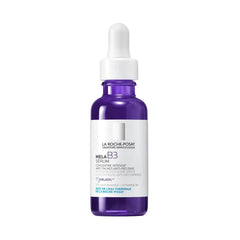
- Premium routine, 910 DH: Bioderma Pigmentbio Foaming Cream (231 DH), La Roche-Posay Mela B3 serum (399 DH), ISDIN FotoUltra Spot Prevent SPF50+ (280 DH).
Both routines are above 549 DH, so delivery is free anywhere in Morocco, with cash on delivery. The test above adjusts each product to your skin, skin tone and budget. Product pages are in French.
When should you see a doctor?
A spot is not always harmless. Show it to a doctor or dermatologist if:
- it changes in size, shape or colour;
- it has irregular edges or several colours;
- it bleeds, itches, crusts or becomes raised;
- it appears suddenly, with no sun or spot before;
- melasma bothers you a lot: a prescription treatment can be added to your routine.
If you are pregnant or breastfeeding, have each product checked by your doctor. The test then removes the actives to avoid.
Explore dark spot care
- All dark spot care (in French)
- Brands: La Roche-Posay, Eucerin, Bioderma, ISDIN, Uriage
- Guides in English: best dark spot cream in Morocco and La Roche-Posay Mela B3 routine
- In French: Diagnostic taches brunes and the full dark spots guide
Frequently asked questions
Is the dark spots test free?
Yes. It is free, with no sign-up and no photo. Your answers stay on your device and are not saved.
How long until dark spots fade?
It usually takes several weeks to a few months of regular use, with SPF 50+ every day. Melasma is slower and comes back easily, so sun protection is needed all year round.
Which products should I avoid during pregnancy?
Avoid retinol, retinal and hydroquinone. The test removes them from your routine if you say you are pregnant. Have each product checked by your doctor.
Does the test replace a dermatologist?
No. It is cosmetic advice, not a skin examination. A spot that changes, bleeds or appears suddenly must be seen by a doctor or dermatologist.
Can someone check my routine?
Yes, for free: send your result on WhatsApp to +212 668 747 103 or visit the ParaSmart shop in Sidi Maarouf, Casablanca. We deliver anywhere in Morocco.
Sources
- Melasma (facial pigmentation) — DermNet (accessed 10/11/2026)
- Solar lentigo — DermNet (accessed 10/11/2026)
- Postinflammatory hyperpigmentation — DermNet (accessed 10/11/2026)
- Melasma: Diagnosis and treatment — American Academy of Dermatology (accessed 10/11/2026)
- How to fade dark spots in darker skin tones — American Academy of Dermatology (accessed 10/11/2026)
- Symptoms of melanoma skin cancer — NHS (accessed 10/11/2026)